MS PowerPoint Design Tab
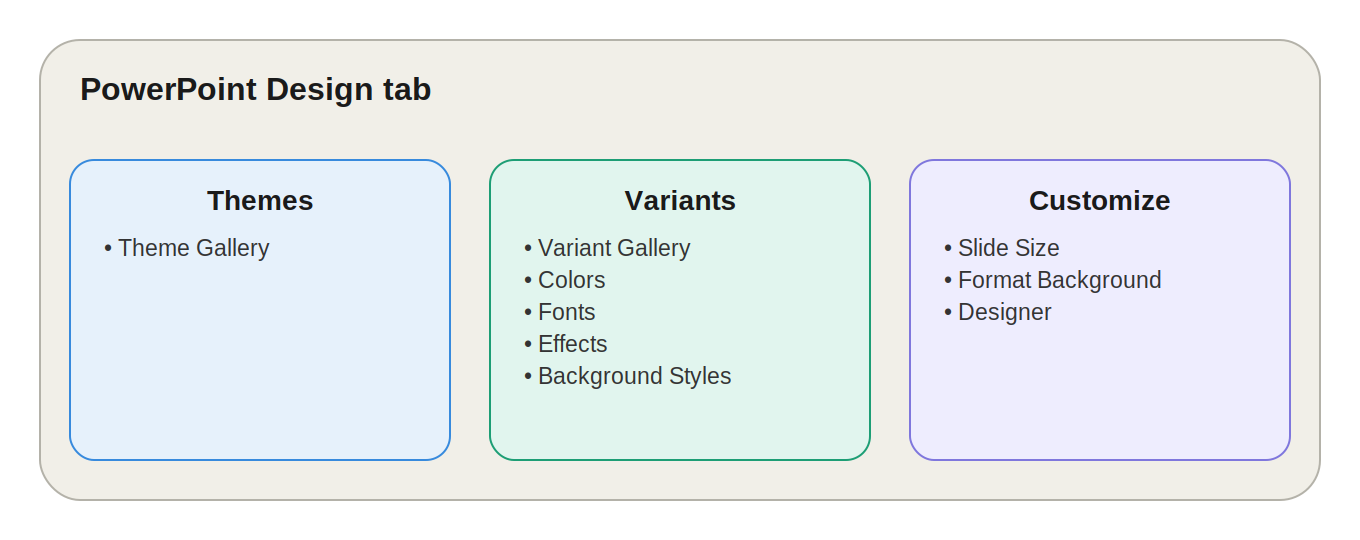
The Design tab in PowerPoint comes after Insert. Similar to Word's Design tab, it controls the overall visual theme of your presentation — but here it's arguably even more central, since a presentation's look matters as much as its content.
It has three groups: Themes, Variants, and Customize.
1. Themes Group
- Theme Gallery – A row of pre-built design themes (Facet, Ion, Berlin, Retrospect, etc.). Each theme defines fonts, colors, background graphics, and placeholder layouts for the entire presentation. Clicking one instantly restyles every slide.
2. Variants Group
- Variant Gallery – Once you've picked a theme, Variants show 3–4 alternate color/style versions of that same theme (different accent colors, background shades) without changing the underlying layout structure.
- Colors – Swap the color palette used across the theme.
- Fonts – Swap the heading/body font pairing used across the theme.
- Effects – Change the visual effects (shadows, bevels) applied to shapes and graphics.
- Background Styles – Quick-apply background fill options tied to the current theme.
3. Customize Group
- Slide Size – Switches between Standard (4:3) and Widescreen (16:9) aspect ratios, or set a custom size — important to decide early, since changing it later can require repositioning content.
- Format Background – Opens a pane to set a custom background fill (solid color, gradient, picture, or pattern) for the current slide or all slides.
- Designer (Microsoft 365) – AI tool that automatically suggests several polished layout options for your current slide based on the text and images already on it. This also appears on the Home tab, but lives here as its primary home in many versions.
PowerPoint Design Tab vs. Word Design Tab
| Feature | Word | PowerPoint |
|---|---|---|
| Purpose | Restyle document (headings, colors, fonts) | Restyle entire slide deck (theme, colors, fonts, layout) |
| Unique tool | Watermark, Page Borders | Slide Size, Designer |
| Shared concept | Style Set gallery | Theme gallery |
| Shared concept | Colors, Fonts, Effects | Colors, Fonts, Effects (under Variants) |
When You'll Actually Use This Tab
- Theme Gallery – The very first thing to set when starting a new presentation, to establish a consistent look from slide one.
- Variants – Fine-tuning a theme's color scheme to match brand colors without abandoning the whole theme.
- Slide Size – Deciding widescreen vs. standard before adding content, to avoid resizing headaches later.
- Designer – Quickly upgrading a plain bullet-point slide into a visually structured layout with one click.
- Format Background – Adding a custom photo or brand-colored background to a title slide.
FAQ:
1. What is the Design tab used for in PowerPoint? It controls the overall visual theme of your entire presentation — colors, fonts, backgrounds, layouts, and slide size — applied across all slides at once.
2. What's the difference between a Theme and a Variant? A Theme sets the core design (layout structure, base colors, fonts). A Variant offers a few alternate color/style versions of that same theme without changing its underlying structure.
3. When should I set my Slide Size — before or after adding content? Before. Changing slide size (Standard 4:3 vs. Widescreen 16:9) after you've added content can shift, stretch, or misalign objects, requiring manual repositioning.
4. What does the Designer tool actually do? It analyzes the text and images already on your current slide and instantly suggests several professionally arranged layout options — you pick the one you like.
5. Can I use a custom background image instead of a built-in theme? Yes — use Format Background to apply a picture, solid color, gradient, or pattern fill to one slide or all slides.
6. Does changing the Theme affect slides I've already customized? It can — Theme changes typically apply to placeholders and default colors, but content you've manually restyled (like a custom-colored text box) may stay as you set it.
7. Where do I change just the color scheme without changing the whole theme? Use Colors in the Variants group — it swaps the color palette while keeping the same theme layout and fonts.
8. Is Designer available in all versions of PowerPoint? No — Designer requires a Microsoft 365 subscription and an internet connection; it's not available in one-time-purchase (non-subscription) versions.
9. What's the easiest way to give a presentation a polished look fast? Pick a Theme, choose a Variant that matches your brand colors, then run Designer on a few key slides for instant layout polish.
10. Can I apply a background only to one slide instead of the whole deck? Yes — in Format Background, choose "Apply to All" to affect every slide, or leave it unchecked to apply the background to just the current slide.
Quick One-Liners
- Theme Gallery restyles fonts, colors, and layouts across the entire deck in one click.
- Variants let you fine-tune a theme's color palette without losing its layout structure.
- Slide Size should be locked in before adding content to avoid repositioning headaches.
- Designer (365 only) auto-suggests polished slide layouts based on your current content.
- Format Background applies a custom color, gradient, or image behind your slide content.
- Colors swaps just the accent palette, leaving fonts and layout untouched.
- Fonts changes the heading/body font pairing across the whole presentation at once.
- Effects controls shadows and bevels applied to shapes, not to plain text.
- Widescreen (16:9) is the modern default; Standard (4:3) suits older projectors.
- Setting a Theme first, before adding slides, saves the most formatting time overall.
💬 Leave a Comment & Rating