MS Word Mailings Tab
Advertisement
The Mailings tab comes after References in Word's ribbon. It's built for one specific job: mail merge — combining a single document template with a list of names, addresses, or other data to produce personalized letters, envelopes, labels, or emails in bulk.
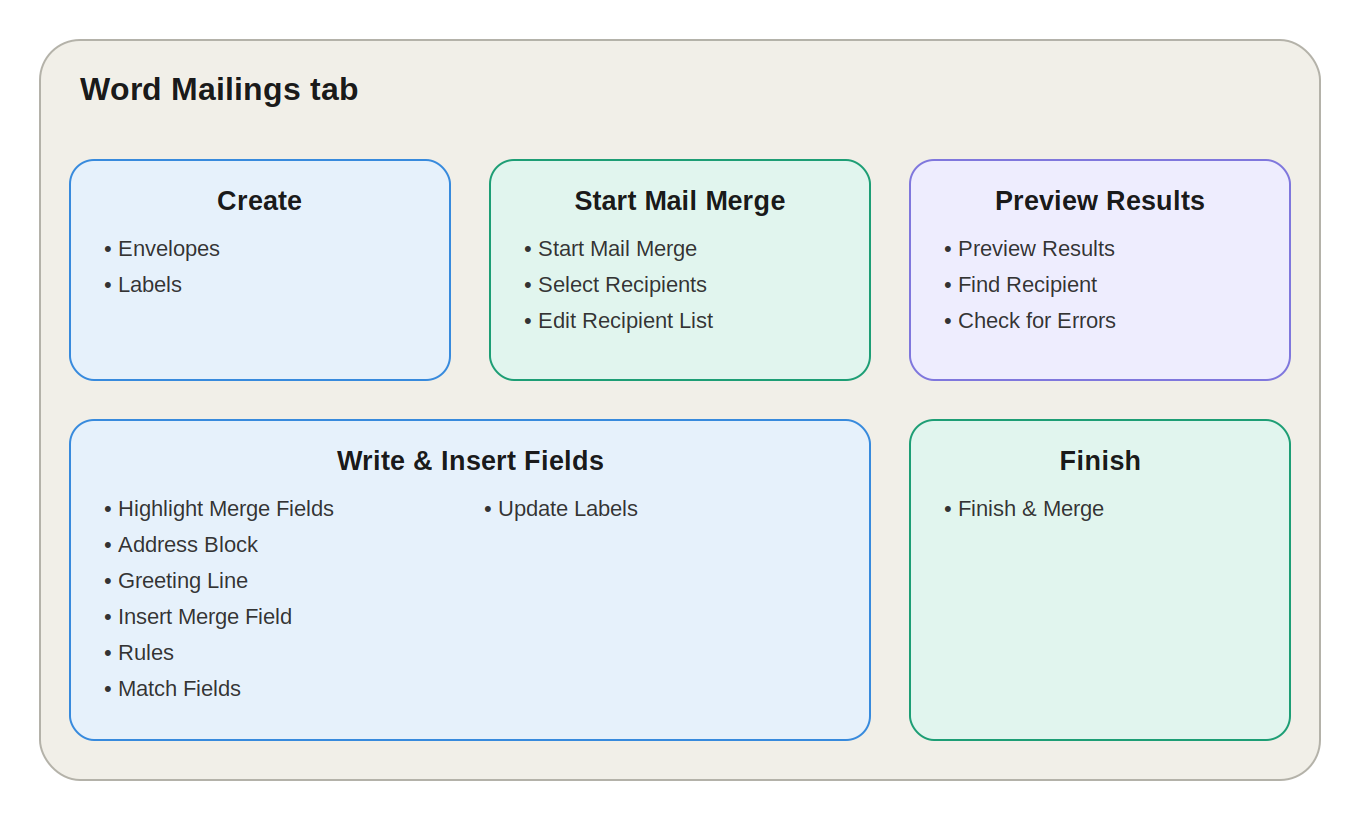
It has five groups: Create, Start Mail Merge, Write & Insert Fields, Preview Results, and Finish.
1. Create Group
For one-off printing tasks that don't need a full mail merge.
- Envelopes – Opens a dialog to print a single envelope with a delivery address and return address.
- Labels – Opens a dialog to print a full sheet of labels (mailing labels, name tags) using a single address, or set up a sheet ready for mail merge.
2. Start Mail Merge Group
Sets up the merge process itself.
- Start Mail Merge – Choose the type of document you're creating: Letters, Email Messages, Envelopes, Labels, or a Directory (like a catalog or list). Also includes a Step-by-Step Mail Merge Wizard for a guided walkthrough.
- Select Recipients – Connects your document to a data source: an existing list (Excel spreadsheet, Outlook contacts), or lets you Type a New List directly in Word.
- Edit Recipient List – Opens a dialog to review, filter, sort, or exclude specific entries from your data source before merging (e.g., uncheck names you don't want included in this batch).
3. Write & Insert Fields Group
Where you build the actual personalized content.
- Highlight Merge Fields – Shades all merge fields in the document gray, making it easy to see which parts of the text will be replaced with personalized data.
- Address Block – Inserts a pre-formatted mailing address block (name, street, city, state, zip) pulled automatically from your data source, with formatting options.
- Greeting Line – Inserts a personalized greeting (e.g., "Dear Mr. Smith,") with options for format and a fallback for missing names.
- Insert Merge Field – Inserts any individual field from your data source (like First Name, Company, or Order Number) at the cursor position.
- Rules – Adds conditional logic to the merge, such as "If [Field] equals [Value], then show this text" — useful for personalized offers or conditional paragraphs.
- Match Fields – Maps your data source's column headers to Word's expected field names, if they don't automatically align (e.g., matching "Surname" in your spreadsheet to Word's "Last Name" field).
- Update Labels – When merging labels, this applies the same layout to every label on the sheet after you've set up the first one.
4. Preview Results Group
Lets you check the merge before printing or sending.
- Preview Results – Toggles between viewing the merge field codes and viewing what the actual personalized document will look like with real data filled in.
- Find Recipient – Searches your data source to jump directly to a specific person's record for review.
- Check for Errors – Runs a simulated merge to catch errors before the real thing — you can choose to see errors reported without completing the merge, or to actually complete it and pause on errors.
5. Finish Group
- Finish & Merge – The final step, with three options:
- Edit Individual Documents – Creates one combined new document with a separate page/section for every recipient, which you can review or edit before printing.
- Print Documents – Sends the merged output straight to the printer.
- Send Email Messages – Sends personalized emails directly to each recipient's email address (requires Outlook and an Email Address field in your data source).
When You'll Actually Use This Tab
- Mass letters – Personalized letters to a list of customers, donors, or clients (same letter, different name/address each time).
- Envelopes & Labels – Printing an entire batch of mailing labels or envelopes from a contact list instead of typing each one manually.
- Certificates or invitations – Personalizing a name on each certificate or invite from an event guest list.
- Bulk personalized email – Sending the same email template to many recipients with each one addressed individually.
Advertisement
💬 Leave a Comment & Rating