विज्ञापन / Advertisement
Data Structure and Algorithm (DSA) का पूरा Syllabus 2026 – Government Exams के लिए Topic-Wise गाइड
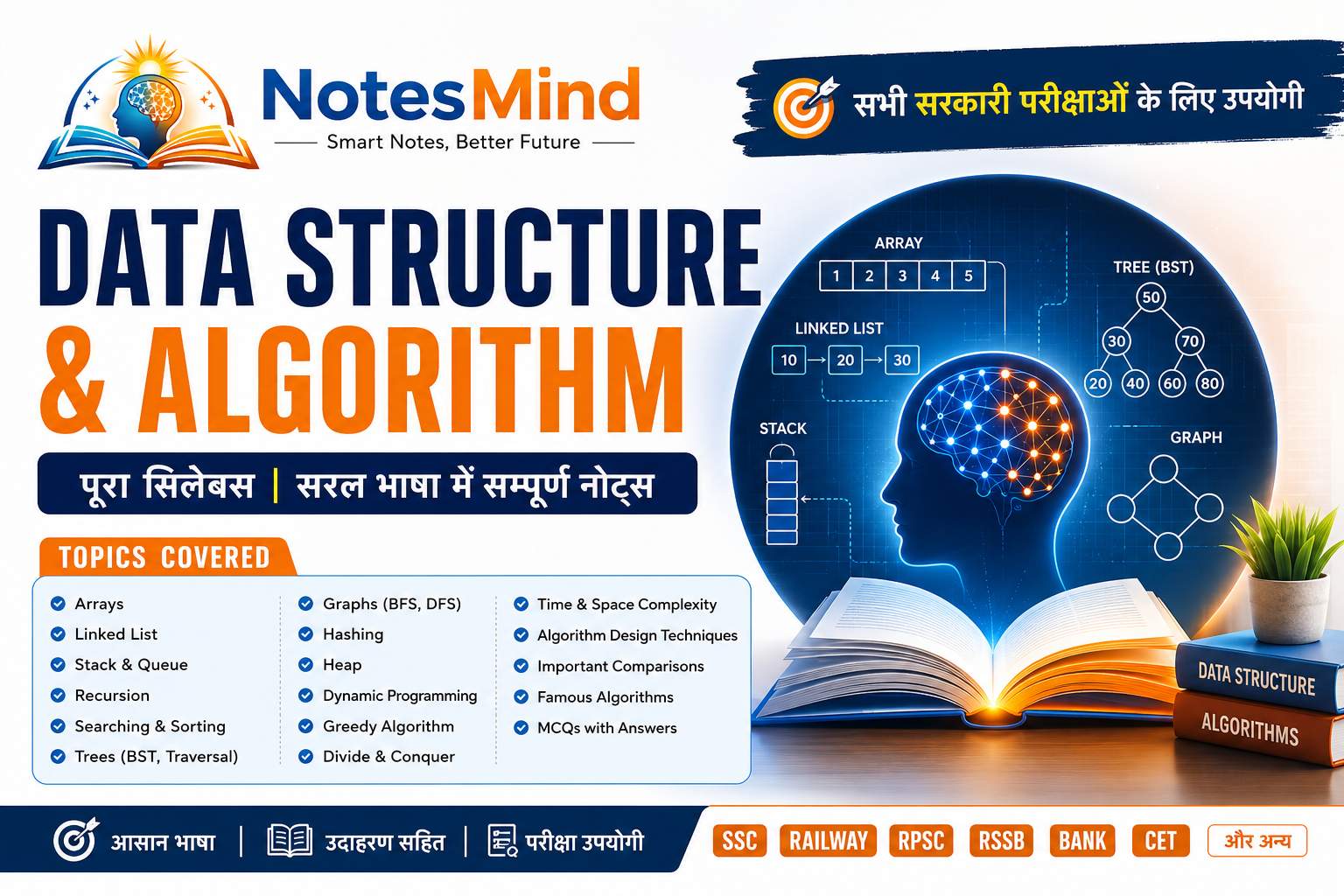
Data Structure and Algorithm (DSA) का पूरा Syllabus – Government Exam के लिए Complete गाइड
अगर आप किसी भी Government Exam की तैयारी कर रहे हैं जिसमें Computer Science या IT का पेपर आता है, तो Data Structure and Algorithm (DSA) एक ऐसा subject है जिसे नज़रअंदाज़ नहीं किया जा सकता। बहुत से students इस subject से घबरा जाते हैं क्योंकि इसमें topics काफी ज़्यादा होते हैं और logic-based questions आते हैं। लेकिन अगर आप एक structured syllabus follow करें, तो यह subject उतना मुश्किल नहीं है जितना लगता है।
इस पोस्ट में मैंने DSA का पूरा syllabus, module-wise और topic-wise, आसान विवरण के साथ कवर किया है — ताकि आपको एक ही जगह पर पूरा roadmap मिल जाए। चलिए शुरू करते हैं।
DSA क्या है और यह Important क्यों है?
Data Structure वह तरीका है जिससे हम data को computer की memory में organize और store करते हैं, और Algorithm वह step-by-step process है जिससे हम उस data पर काम करते हैं — जैसे search करना, sort करना या modify करना। Government exams में DSA इसलिए important है क्योंकि यह programming, problem-solving और logical thinking की foundation है। चाहे SSC हो, Banking हो या Technical Exams — DSA के concepts बार-बार पूछे जाते हैं।
नीचे दिया गया syllabus आपको module by module पूरा concept clear करेगा।
Module 1: Introduction to Data Structure
- Data – Data क्या होता है और उसके types (Numeric, Character, Boolean वगैरह) क्या होते हैं।
- Information – Data को process करके उससे useful information कैसे बनाई जाती है।
- Data Structure – Data को organized तरीके से store और manage करने की technique।
- Need of Data Structure – Data Structure की ज़रूरत क्यों पड़ती है, efficiency के नज़रिए से।
- Characteristics of Data Structure – Efficiency, Simplicity और Reusability जैसी खासियतें।
- Types of Data Structure – Primitive, Non-Primitive, Linear और Non-Linear categories।
- Static vs Dynamic Data Structure – Fixed size और variable size structures का फर्क।
Module 2: Algorithm
- Algorithm Introduction – Algorithm का basic मतलब और concept।
- Characteristics of Algorithm – Input, Output, Definiteness, Finiteness और Effectiveness।
- Advantages & Disadvantages of Algorithm – Algorithm use करने के फायदे और limitations।
- Writing Algorithm – Algorithm लिखने का सही तरीका और steps।
- Pseudocode – Real code लिखने से पहले logic को सरल भाषा में लिखना।
- Flowchart – Algorithm को visually represent करने का तरीका।
- Algorithm vs Flowchart vs Program – तीनों में क्या अंतर होता है।
Module 3: Complexity Analysis
- Time Complexity – Algorithm को run होने में कितना time लगता है, यह measure करना।
- Space Complexity – Algorithm को कितनी memory चाहिए, यह analyze करना।
- Best, Worst और Average Case – अलग-अलग conditions में algorithm का performance।
- Asymptotic Analysis – Large input size पर algorithm का behavior समझना।
- Big O, Omega और Theta Notation – Complexity को mathematically represent करने के तरीके।
- Complexity Comparison – Different notations और cases का comparison।
Module 4: Arrays
- Introduction & Memory Representation – Array क्या है और memory में कैसे store होता है।
- Types of Arrays – One Dimensional, Two Dimensional और Multi Dimensional Array।
- Operations on Array – Traversing, Insertion, Deletion, Searching, Updating, Sorting और Merging।
- Advantages, Disadvantages & Applications – Array use करने के फायदे-नुकसान और real-life uses।
Module 5: Strings
- Introduction – String data structure का basic concept।
- String Operations – Length, Concatenation, Comparison, Copy और Reverse जैसे operations।
- Pattern Matching – String में एक particular pattern ढूंढने की technique।
Module 6: Linked List
- Introduction & Need – Linked List क्या है और Array से अलग क्यों ज़रूरी है।
- Node Structure – Linked List के एक node का structure कैसा होता है।
- Types – Singly, Doubly, Circular और Circular Doubly Linked List।
- Operations – Traversing, Searching, Insertion, Deletion और Reverse।
- Advantages, Disadvantages & Applications – कब और क्यों Linked List use किया जाता है।
Module 7: Stack
- Introduction & LIFO Principle – Stack का Last In First Out concept।
- Stack Representation – Stack को denote करने का तरीका।
- Operations – Push, Pop, Peek और Display।
- Stack using Array & Linked List – दोनों तरीकों से implementation।
- Applications – Parenthesis Matching, Function Call, Recursion, Undo Operation और Expression Conversion।
Module 8: Queue
- Introduction & FIFO Principle – Queue का First In First Out concept।
- Queue Operations – Enqueue, Dequeue, Peek और Display।
- Types – Simple Queue, Circular Queue, Priority Queue और Deque।
- Queue using Array & Linked List – दोनों तरीकों से implementation।
- Applications – Real-life और computing में Queue का use।
Module 9: Recursion
- Introduction & Recursive Function – Function खुद को call कैसे करता है।
- Base Case & Recursive Case – Recursion रुकने और continue होने की condition।
- Direct & Indirect Recursion – Recursion के types।
- Advantages, Disadvantages & Applications – Recursion कब useful है और कब नहीं।
Module 10: Searching
- Linear Search – एक-एक करके element check करना।
- Binary Search – Sorted data में fast searching technique।
- Comparison & Time Complexity – दोनों methods का performance analysis।
Module 11: Sorting
- Bubble, Selection, Insertion Sort – Basic sorting algorithms।
- Merge Sort & Quick Sort – Divide and Conquer based sorting।
- Heap Sort, Radix Sort, Counting Sort, Shell Sort – Advanced sorting techniques।
- Comparison of Sorting Algorithms – कौनसा algorithm कब best है।
- Stable vs Unstable Sorting – Equal elements का order maintain होता है या नहीं।
- Internal vs External Sorting – Memory के अंदर और बाहर sorting करना।
Module 12: Trees
- Introduction & Terminology – Root, Parent, Child, Leaf, Height, Level, Degree, Depth।
- Types of Tree – Binary, Full, Complete, Perfect, Balanced और Skew Tree।
- Binary Search Tree (BST) – Sorted tree structure जिसमें searching fast होती है।
- Operations – Insert, Delete और Search।
- Tree Traversal – Inorder, Preorder, Postorder और Level Order।
- Applications – Trees का real-world use।
Module 13: Heap
- Introduction – Heap data structure का basic concept।
- Max Heap & Min Heap – दोनों types का फर्क।
- Heap Operations & Heap Sort – Heap पर काम करने के methods।
Module 14: Graph
- Introduction & Terminology – Vertex, Edge, Degree, Path और Cycle।
- Types – Directed, Undirected, Weighted और Unweighted Graph।
- Graph Representation – Matrix और List के through।
- Graph Traversal – BFS और DFS technique।
- Applications – Graph का use कहाँ-कहाँ होता है।
Module 15: Hashing
- Introduction & Hash Function – Data को fast access के लिए map करना।
- Hash Table – Hashed data को store करने का structure।
- Collision & Collision Resolution – Chaining, Linear Probing, Quadratic Probing और Double Hashing।
Module 16: File Organization
- Sequential, Indexed & Direct File – File को store करने के अलग तरीके।
- File Operations – Files पर किए जाने वाले basic operations।
Module 17: Advanced Data Structures
- AVL Tree, B Tree, B+ Tree, Red Black Tree – Self-balancing और database-oriented trees।
- Trie – String data को efficiently store करने का structure।
- Segment Tree & Fenwick Tree – Range queries के लिए advanced structures।
Module 18: Algorithm Design Techniques
- Brute Force & Divide and Conquer – Problem solve करने के basic approach।
- Greedy Algorithm & Dynamic Programming – Optimal solution निकालने की techniques।
- Backtracking & Branch and Bound – Complex problems solve करने के advanced methods।
- Recursion Tree – Recursive algorithm का visual analysis।
Module 19: Famous Algorithms
- Binary Search, Merge Sort, Quick Sort, Heap Sort – Widely used core algorithms।
- Dijkstra, Prim और Kruskal Algorithm – Graph और shortest path से related algorithms।
- Floyd Warshall Algorithm – All-pairs shortest path algorithm।
- Huffman Coding – Data compression technique।
- KMP Algorithm – Fast string pattern matching algorithm।
निष्कर्ष (Conclusion)
यह था DSA का पूरा syllabus Government Exams के लिए — Basics से लेकर Advanced Data Structures और Famous Algorithms तक। अगर आप step by step इन modules को follow करेंगे, तो न सिर्फ आपकी exam preparation strong होगी, बल्कि programming और problem-solving skills भी काफी improve होंगी।
अगर यह पोस्ट आपको helpful लगी हो, तो इसे अपने दोस्त और exam-preparation group के साथ ज़रूर share करें, ताकि उन्हें भी एक organized syllabus मिल सके।
विज्ञापन / Advertisement
💬 Leave a Comment & Rating